
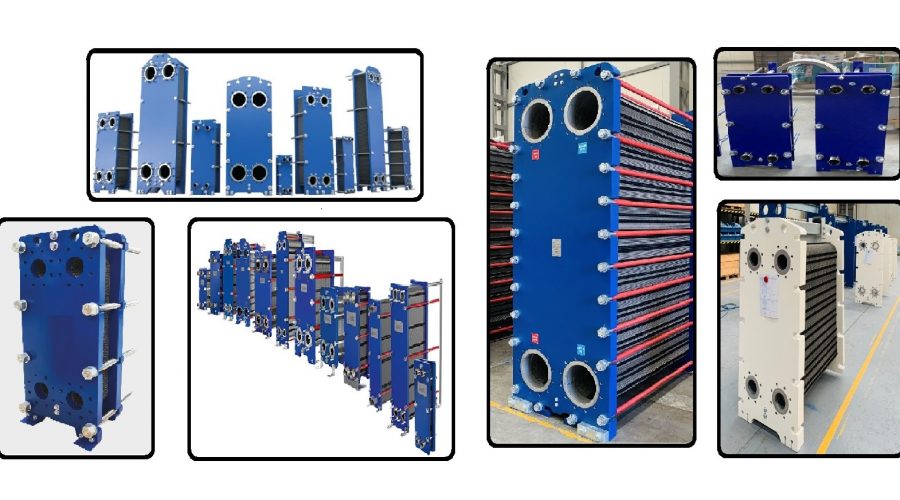

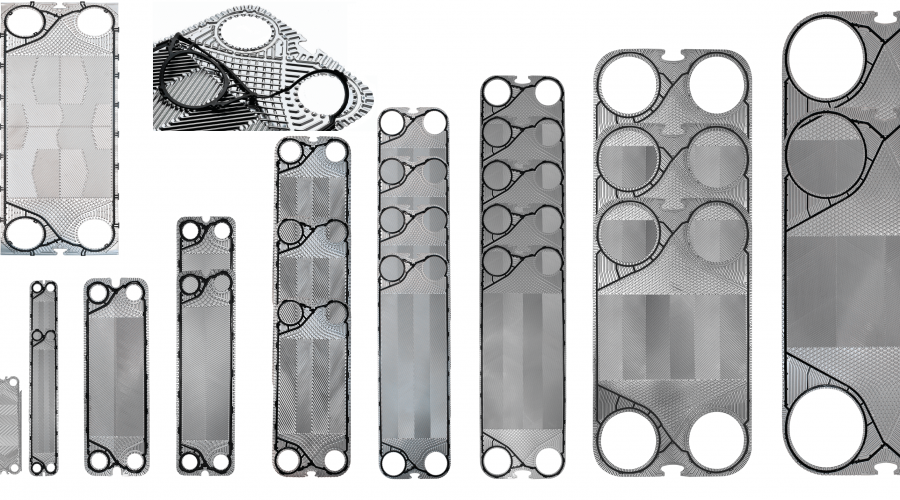
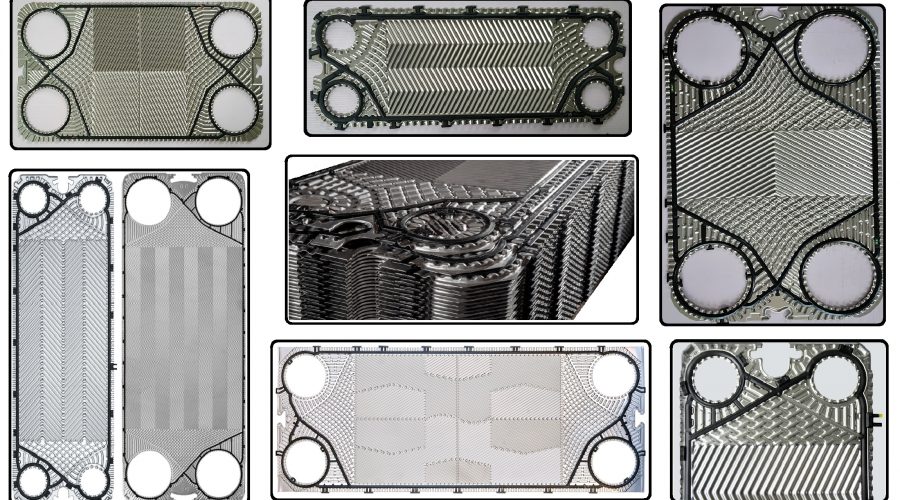
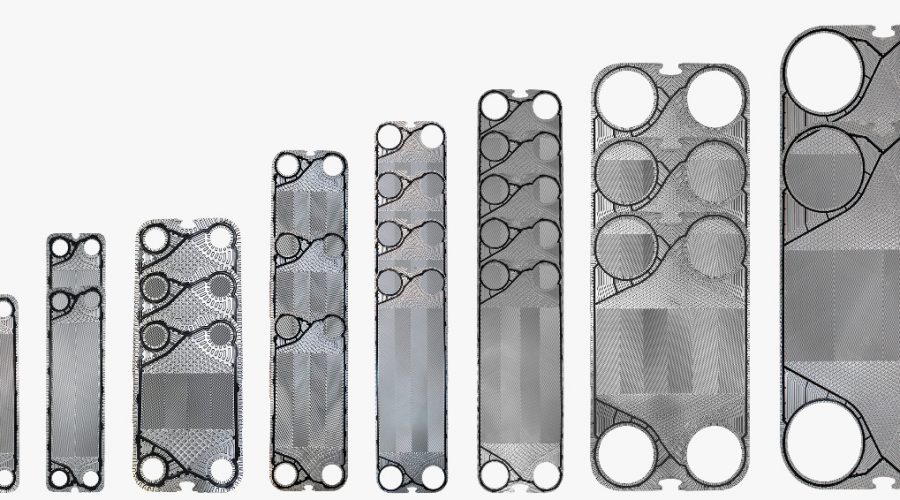

PHE Technical specifications
-
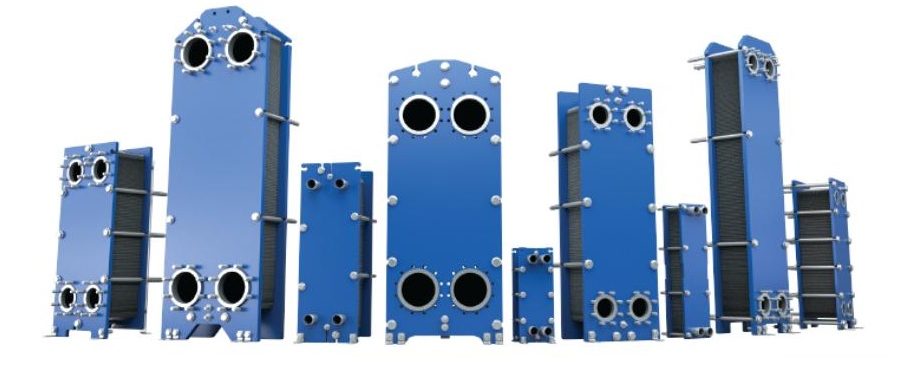
Connections from DN25 to DN300 (1″ to 12″)
-
(Frames designed according to FEA and PED 2014/68/EU (EN13445) and ASME sec VIII, Div. 1 construction standards)
-
Plates Material (M.O.C) AISI 304, AISI 316, Titanium, SMO
-
Gaskets Material (M.O.C) NBR, HNBE, EPDM, VITON(FKM), NEOPRENE, BUTYLE, HYPOLIN & PTFE
-
Shell materials: Carbon steel, stainless steel
-
Working pressure up to 40 bar (580 psi)
-
Working temperature -10 °C up to 250 °C (50 °F to 482 °F) for bolted types (up to 400 °C (752 °F) for the fully welded types)
Applications
-
HVAC industry – e.g. district cooling solutions using seawater and groundwater as cooling source – e.g. district heating solutions using, for example, solar and geothermal energy as heating source
-
Marine/offshore industry – e.g. central and lubrication oil cooling
-
Dairy/food/beverage industry – e.g. pasteurization, heat recoveries, and duties that require gentle treatment
-
Sugar industry
-
Biogas industry
-
Pulp and paper industry
-
Heavy industry
-
Mining industry
-
Petrochemical industry
-
Chemical industry – e.g. waste heat recovery from condenser water
Static Engineer’s a stocking distributor of Plate Heat Exchanger Gaskets, Plate and Frame Heat Exchangers or for Plates for Plate and Frame Heat Exchangers.
We also engineer, thermal rate, expand, clean, and sell plate and frame heat exchangers. We have been stocking and selling plate heat exchanger gaskets and heat exchangers.
Spare Parts Service:
- Supply of original spare parts across pan india
- Overhaul of complete unit
- Subsequent performance optimization
- Extension of plate pack/modification of plate configuration
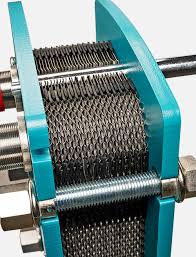
PLATE HEAT EXCHANGER
PLATE HEAT EXCHANGER
Click edit button to change this text. Lorem ipsum dolor sit amet, consectetur adipiscing elit. Ut elit tellus, luctus nec ullamcorper mattis, pulvinar dapibus leo.
Plate Heat Exchanger (PHE)
A plate heat exchanger is a type of heat exchanger that uses metal plates to transfer heat between two fluids. This has a major advantage over a conventional heat exchanger in that the fluids are exposed to a much larger surface area because the fluids are spread out over the plates. This facilitates the transfer of heat, and greatly increases the speed of the temperature change.
The plate heat exchanger (PHE) is a specialized design well suited to transferring heat between medium and low pressure fluids. Welded, semi-welded and brazed heat exchangers are used for heat exchange between high-pressure fluids or where a more compact product is required. In place of a pipe passing through a chamber, there are instead two alternating chambers, usually thin in depth, separated at their largest surface by a corrugated metal plate. The plates used in a heat exchanger are obtained by one piece pressing of metal plates. Stainless steel is a commonly used metal for the plates because of its ability to withstand high temperatures, its strength, and its corrosion resistance.
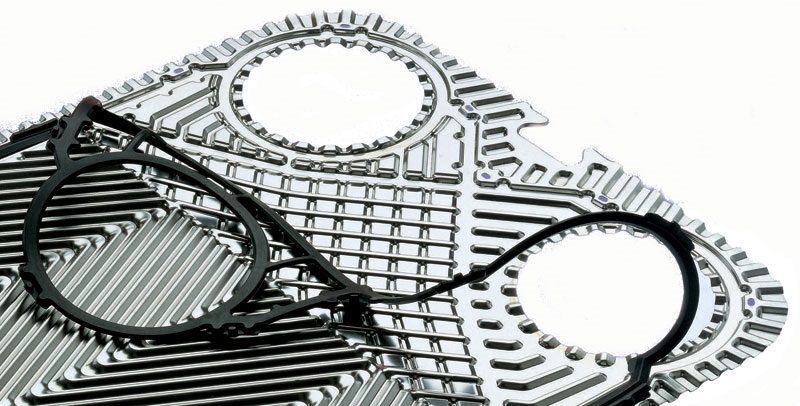
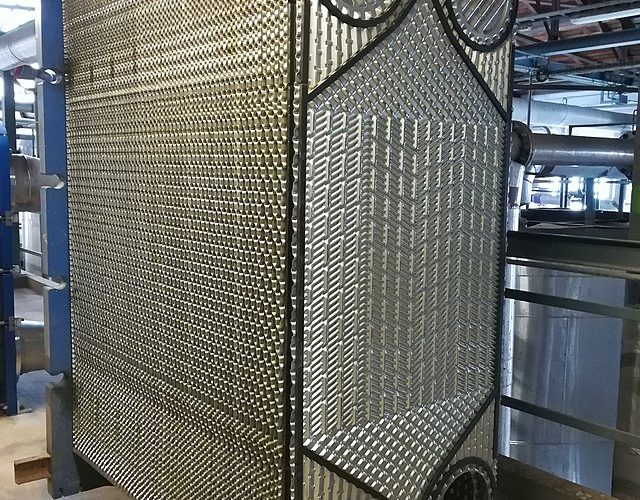
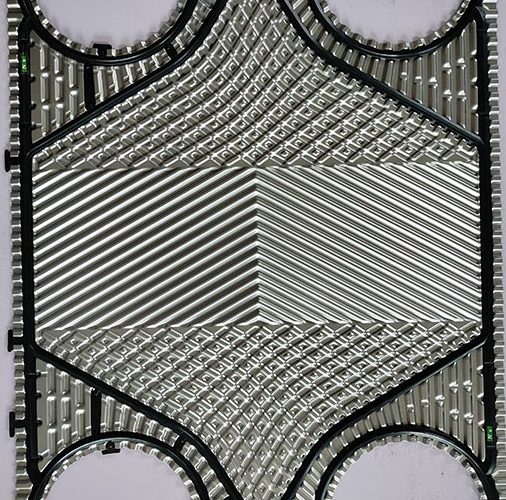
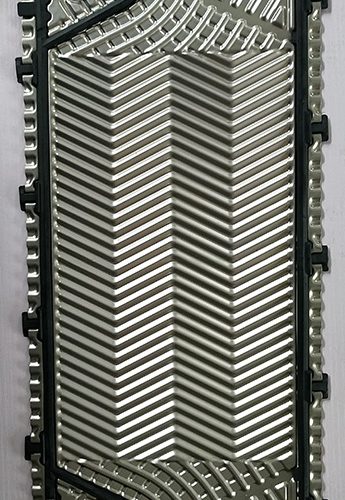
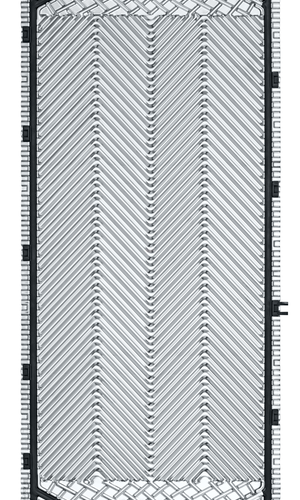
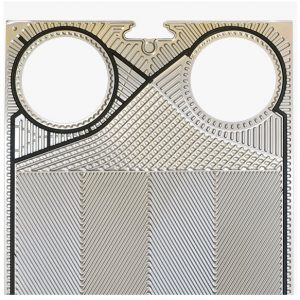
The plates are often spaced by rubber sealing gaskets which are cemented/glued into a section around the edge of the plates. The plates are pressed to form troughs at right angles to the direction of flow of the liquid which runs through the channels in the heat exchanger. These troughs are arranged so that they interlink with the other plates which forms the channel with gaps of 1.3–1.5 mm between the plates. The plates are compressed together in a rigid frame to form an arrangement of parallel flow channels with alternating hot and cold fluids. The plates produce an extremely large surface area, which allows for the fastest possible transfer. Making each chamber thin ensures that most of the volume of the liquid contacts the plate, again aiding exchange. The troughs also create and maintain a turbulent flow in the liquid to maximize heat transfer in the exchanger. A high degree of turbulence can be obtained at low flow rates and high heat transfer coefficient can then be achieved.
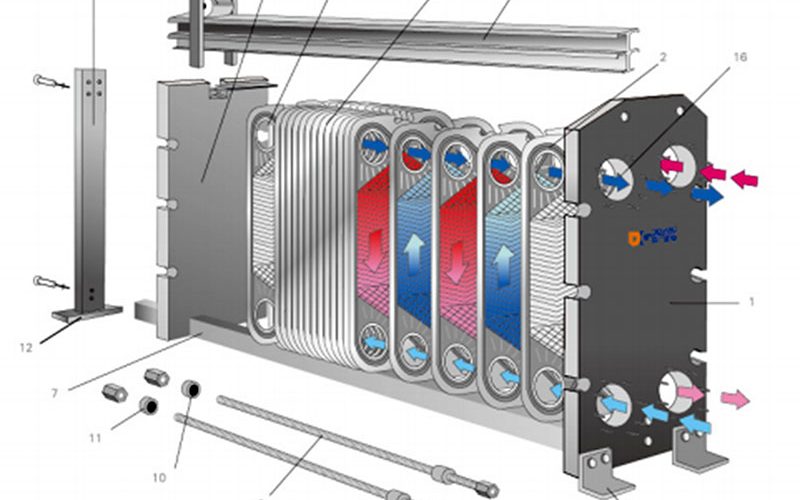
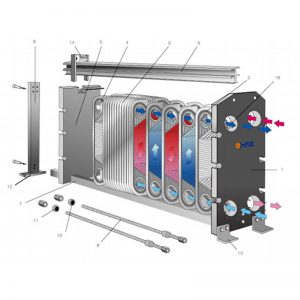
PHE consists of
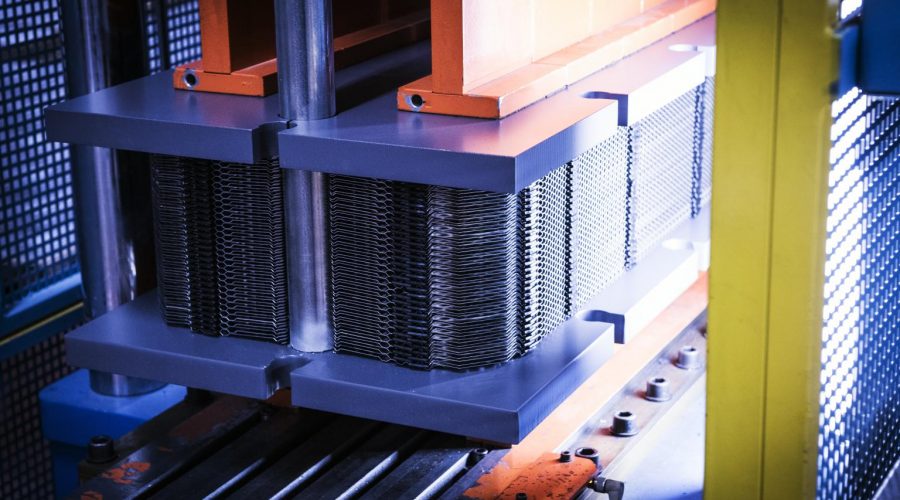
- pack with linked up embossed plates with passage openings. Every second plate is staggered by 180°, creating a flow gap in each case. All plates are provided with gaskets, which completely seal the various flow gaps from the outside and separate the second media involved in heat exchanger.
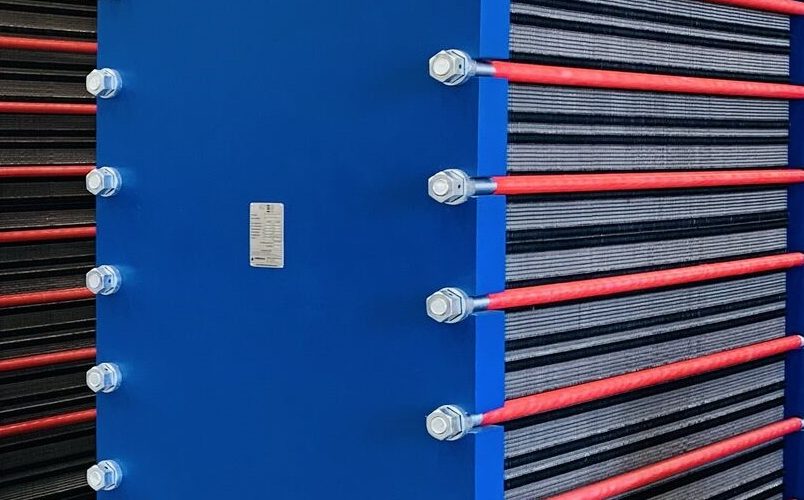
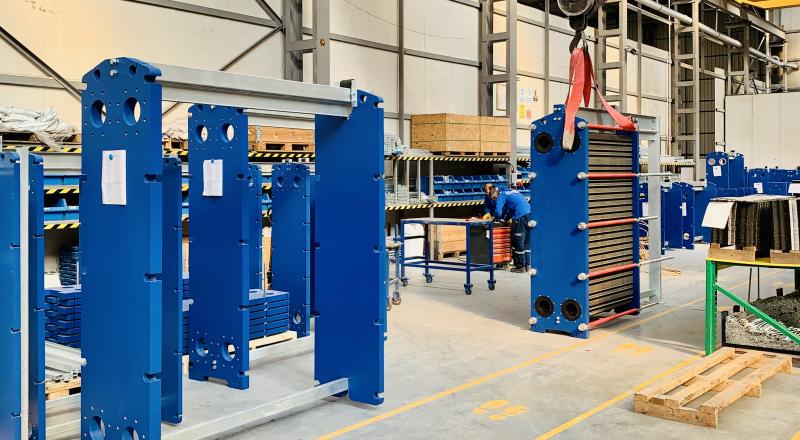
- The plate pack is mounted in a rack and is pressed between the fixed plate and pressure plate by means of clamping bolts.
- Warm and cold media are normally led through the PHE in one-pass or multipass counter flows in order to guarantee a maximum heat transfer.
- Connections are on the fixed plate, in case of multi-pass flow they can also be on the pressure plate.
As compared to shell and tube heat exchangers, the temperature approach in a plate heat exchangers may be as low as 1 °C whereas shell and tube heat exchangers require an approach of 5 °C or more. For the same amount of heat exchanged, the size of the plate heat exchanger is smaller, because of the large heat transfer area afforded by the plates (the large area through which heat can travel). Increase and reduction of the heat transfer area is simple in a plate heat-exchanger, through the addition or removal of plates from the stack.
To achieve improvement in PHE’s, two important factors namely amount of heat transfer and pressure drop have to be considered such that amount of heat transfer needs to be increased and pressure drops need to be decreased. In plate heat exchangers due to presence of corrugated plate, there is a significant resistance to flow with high friction loss. Thus to design plate heat exchangers, one should consider both factors. For various range of Reynolds numbers, many correlations and chevron angles for plate heat exchangers exist. The plate geometry is one of the most important factor in heat transfer and pressure drop in plate heat exchangers, however such a feature is not accurately prescribed. In the corrugated plate heat exchangers, because of narrow path between the plates, there is a large pressure capacity and the flow becomes turbulent along the path. Therefore, it requires more pumping power than the other types of heat exchangers. Therefore, higher heat transfer and less pressure drop are targeted. The shape of plate heat exchanger is very important for industrial applications that are affected by pressure drop.
Our expertise in handling all types of heat exchangers helps customer identifying suitable model, exact material of construction and expected performance of the heat Exchanger.
As we are the one of the largest suppliers of Plate Heat Exchanger Gaskets and Plates in India. It will help us to support & provide best quality product to our clients.
- Service, Maintenance, Overhaul of All Types of Heat Exchanges
- Supply of Genuine Spares of Heat Exchangers (With 6 Months Warrantee) at a very low price
- Refurbishment & Modernization of Existing Heat Exchangers
- Design & Supply of New Heat Exchangers
On-site Maintenance
Static Engineer’s can send skilled service engineers to perform maintenance work at the customer’s site. We use specialized tools, such as automatic tightening devices, to efficiently dissemble and assemble the PHE and high temperature hot water jet cleaning to remove to sticky oil residues, providing high quality maintenance service at the customer’s site.
CIP Flow Chart
Disassembly and cleaning a PHE makes it possible to remove hard scale and clogging matters and to recover performance to nearly the same level as new.
However, if disassembly and cleaning are not possible, Static Engineer’s offers CIP using “Plate-Clean” at customers’ site.
Before scaling, CIP with Plate-Clean can restore performance by removing scale through washing and dissolving.
This is effective in prolonging the disassembly cleaning cycle of the PHE.
This is effective for extending the disassembly cleaning cycle of plate heat exchangers.